Your knowledge deserves a better home

Why I made Bookend
Bookend started with a fairly mundane problem. I wanted my notes back.
After years of keeping work and research in other note-taking apps, I discovered how difficult it could be to simply take the whole thing and leave. Pages could be viewed. They could be synced. They could sometimes be exported, one piece at a time. But the underlying collection of work no longer really felt like mine.
That seemed backwards.
A notebook may contain years of study, manuscripts, research, half-finished ideas, references, diagrams and things you haven’t thought about since 2017 but will inexplicably need next Thursday. That work deserves a home you can look after yourself.
So I started building Bookend.
The book gives your work a shape
It shouldn’t define its limits. A book is a way to gather ideas, give them structure and make them useful. The knowledge inside it is something you can carry forward: into another project, another collection or another way of working.
Bookend is designed around that distinction. Your content belongs to you, independently of the container you organise it in.
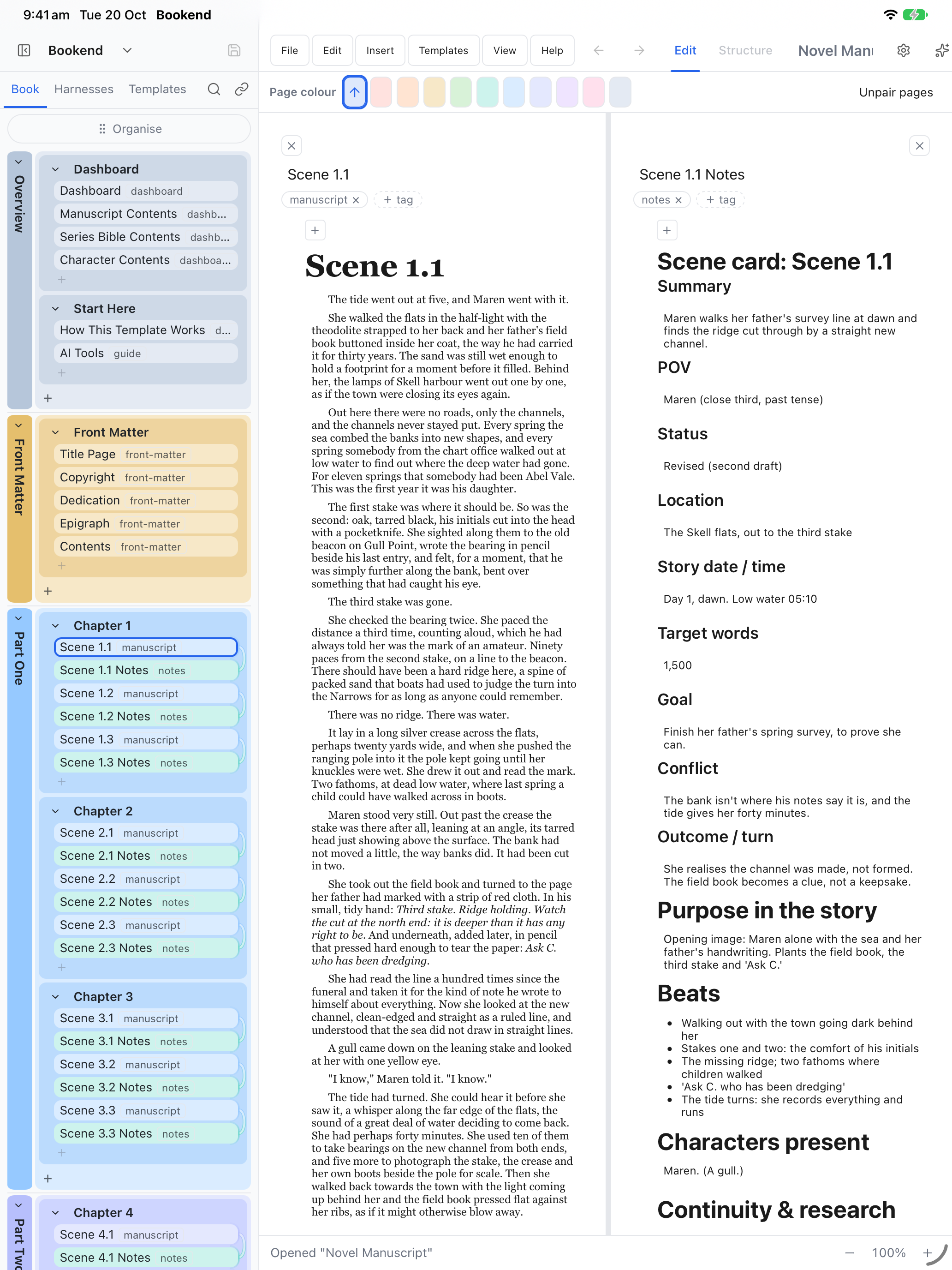
Your books are stored locally as portable files. Bookend brings writing, structure, connections and interactive tools together around them, while keeping local ownership at the centre.
You decide where your books live, how they are backed up and where your work goes next. AI is optional, too. Use it when it helps; your notebook is yours either way.
I’m building Bookend to give knowledge room to grow, and to keep the person who made it in control.